
The Yeast And The Kingdom
How God's new leaven works its way through a fallen world.
Advent Reflection
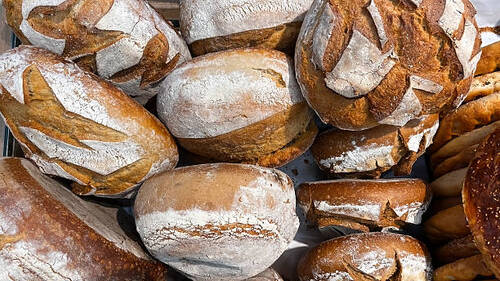
As we enter Advent, I’ve been thinking about how God’s quiet kingdom works its way through the world—not in spectacle, but in the slow rise of redemption. And as I’ve been tinkering around my kitchen, it dawned on me how often God weaves images of baking into the pages of Scripture.
“The kingdom of heaven is like leaven that a woman took and hid in three measures of flour, till it was all leavened.” — Matthew 13:33
Flour, water, and sourdough starter are left alone and begin to move.
Bubbles form, the scent sharpens, and suddenly you have something new: the same ingredients, but a whole new creation.
Leaven works quietly, but once it begins, it cannot be stopped.
For most of Scripture, leaven represented corruption. Israel was told to clear it out before Passover, to leave Egypt with bread that had not yet risen.
Prophets used leaven as a symbol of sin. Jesus Himself warned of “the leaven of the Pharisees.”
It was shorthand for the way evil spreads—small, invisible, and total.
Yet in this parable, Jesus reverses the meaning. He takes the image of decay and redeems it, showing that His kingdom will spread just as completely, only this time bringing life.
Bubbles form, the scent sharpens, and suddenly you have something new: the same ingredients, but a whole new creation.
Leaven works quietly, but once it begins, it cannot be stopped.
For most of Scripture, leaven represented corruption. Israel was told to clear it out before Passover, to leave Egypt with bread that had not yet risen.
Prophets used leaven as a symbol of sin. Jesus Himself warned of “the leaven of the Pharisees.”
It was shorthand for the way evil spreads—small, invisible, and total.
Yet in this parable, Jesus reverses the meaning. He takes the image of decay and redeems it, showing that His kingdom will spread just as completely, only this time bringing life.
The First Leaven: Sin in the Garden
In the beginning, creation was whole. The soil gave freely. There were no thorns or toxins. Life lived in harmony with its Maker.
Then sin entered like yeast, spreading through every part of creation. The curse reached even into the ground itself: “Cursed is the ground because of you.”
Plants grew defenses—thorns, shells, bitter compounds. Even the food meant to sustain humanity began to resist us. The earth that once cooperated now drew its arrows against us.
Like leaven, the sin of Adam worked its way through the earth quickly. But the story only begins here, for we have a Savior who came to redeem what Adam lost.
Then sin entered like yeast, spreading through every part of creation. The curse reached even into the ground itself: “Cursed is the ground because of you.”
Plants grew defenses—thorns, shells, bitter compounds. Even the food meant to sustain humanity began to resist us. The earth that once cooperated now drew its arrows against us.
Like leaven, the sin of Adam worked its way through the earth quickly. But the story only begins here, for we have a Savior who came to redeem what Adam lost.
“For since by a man came death, by a man came also the resurrection of the dead.
For as in Adam all die, even so in Christ shall all be made alive.” — 1 Corinthians 15:21–22
For as in Adam all die, even so in Christ shall all be made alive.” — 1 Corinthians 15:21–22
The Promise of a New Leaven
Not long after the fall, God stepped into our mess and began to bake up a new plan of redemption for the world He loved.
When the Lord visited Abraham at the oaks of Mamre, Sarah hurried to knead three measures of flour. I don’t think it was a mere coincidence that Jesus used this same measure in His parable of the yeast and the kingdom.
As Sarah was kneading the leaven into the physical bread to feed the Lord, I believe the Lord Himself was kneading a new kind of leaven into His creation.
Out of that meal came a promise: that through their son Isaac, blessing would come to the nations. Like a good sourdough starter, this promise was passed down from generation to generation.
It was the promise of a child who would be called Immanuel, God with us, who would establish a kingdom that would have no end. It was the day when the Creator of life would step down from His throne in heaven and enter creation in the form of a child.
In a small town called Bethlehem, the “House of Bread,” the true Bread of Life was born. The promise that began in Abraham’s tent rose quietly in a manger, right in the heart of the Roman Empire.
While the powers of the world built monuments to themselves, God began His redemption with flour, water, and life hidden in obscurity. The world’s empires rose like quick yeast. His kingdom began like sourdough—slow, living, and eternal.
Every empire built on sin eventually collapses beneath its own weight.
Pride makes kingdoms rise in haste, but humility makes them endure.
The kingdoms of this world rise puffed up with their own glory, only to fall flat, while the kingdom of heaven rises by grace, steady and sure.
When the Lord visited Abraham at the oaks of Mamre, Sarah hurried to knead three measures of flour. I don’t think it was a mere coincidence that Jesus used this same measure in His parable of the yeast and the kingdom.
As Sarah was kneading the leaven into the physical bread to feed the Lord, I believe the Lord Himself was kneading a new kind of leaven into His creation.
Out of that meal came a promise: that through their son Isaac, blessing would come to the nations. Like a good sourdough starter, this promise was passed down from generation to generation.
It was the promise of a child who would be called Immanuel, God with us, who would establish a kingdom that would have no end. It was the day when the Creator of life would step down from His throne in heaven and enter creation in the form of a child.
In a small town called Bethlehem, the “House of Bread,” the true Bread of Life was born. The promise that began in Abraham’s tent rose quietly in a manger, right in the heart of the Roman Empire.
While the powers of the world built monuments to themselves, God began His redemption with flour, water, and life hidden in obscurity. The world’s empires rose like quick yeast. His kingdom began like sourdough—slow, living, and eternal.
Every empire built on sin eventually collapses beneath its own weight.
Pride makes kingdoms rise in haste, but humility makes them endure.
The kingdoms of this world rise puffed up with their own glory, only to fall flat, while the kingdom of heaven rises by grace, steady and sure.
The Prophetic Vision of Filling
God’s covenant with Abraham was abundance itself: descendants as numerous as the stars and as countless as the grains of sand on the shore.
Isaiah and Habakkuk echoed the same vision:
Isaiah and Habakkuk echoed the same vision:
“The earth shall be filled with the knowledge of the glory of the Lord, as the waters cover the sea.”
Daniel saw a stone, cut without human hands, that struck the kingdoms of the world and grew into a mountain filling the whole earth.
And the prophet Isaiah proclaimed,
And the prophet Isaiah proclaimed,
“Of the increase of His government and of peace there will be no end.”
Different prophets, same picture—sand, water, mountain—all showing the slow, unstoppable spread of God’s reign through a kingdom not kneaded by human hands.
The false kingdoms of the world rise fast and collapse, but the true one permeates.
The false kingdoms of the world rise fast and collapse, but the true one permeates.
Fermentation as Redemption
The curse that touched the soil also touched the grain.
Wheat locked its nutrients away behind phytates and hard shells—the plant’s own kind of thorn.
Unfermented bread still bears the taste of that struggle.
But when dough is given time to rest, when natural leaven is allowed to work, the acids and microbes break down those defenses. The grain becomes digestible. Its bitterness turns sweet.
Fermentation, patiently done, heals what the curse hardened. So too with the kingdom. Christ’s leaven works through the world slowly, releasing what sin once bound, turning what was hostile into nourishment again.
Like true sourdough, He took into Himself what we could not break down on our own.
He bore the weight of sin—the indigestible substance of a fallen world—and transformed it through His body into life-giving bread for all who partake of Him.
Wheat locked its nutrients away behind phytates and hard shells—the plant’s own kind of thorn.
Unfermented bread still bears the taste of that struggle.
But when dough is given time to rest, when natural leaven is allowed to work, the acids and microbes break down those defenses. The grain becomes digestible. Its bitterness turns sweet.
Fermentation, patiently done, heals what the curse hardened. So too with the kingdom. Christ’s leaven works through the world slowly, releasing what sin once bound, turning what was hostile into nourishment again.
Like true sourdough, He took into Himself what we could not break down on our own.
He bore the weight of sin—the indigestible substance of a fallen world—and transformed it through His body into life-giving bread for all who partake of Him.
Closing Reflection
If this reflection spoke to you, you can subscribe below to receive future essays directly in your inbox. I write slowly and intentionally about food, faith, and the quiet work of restoration.
Next time, I’ll stay with this same image of leaven, looking at how it lives on from generation to generation, and how a simple jar of sourdough starter can still preach the same promise today.
Thank you for reading! I simply would like to end in a prayer: Father I thank you for sending the bread of life into the world that we might live. For we do not live off bread alone but by every word that you speak. So feed us lord with your word and may your word spread from sea to sea until it covers the earth, Amen!
Next time, I’ll stay with this same image of leaven, looking at how it lives on from generation to generation, and how a simple jar of sourdough starter can still preach the same promise today.
Thank you for reading! I simply would like to end in a prayer: Father I thank you for sending the bread of life into the world that we might live. For we do not live off bread alone but by every word that you speak. So feed us lord with your word and may your word spread from sea to sea until it covers the earth, Amen!
Recent
Archive
2025
November
2024
2023